
Glacial Park Conservation Area in Ringwood, IL, really is one of Illinois’ most unique hidden gems when it comes to hiking with a view. I have lived in Illinois my entire life, and grew up doing so much outdoors. I was shocked when I started to research new places to visit and stumbled upon this.
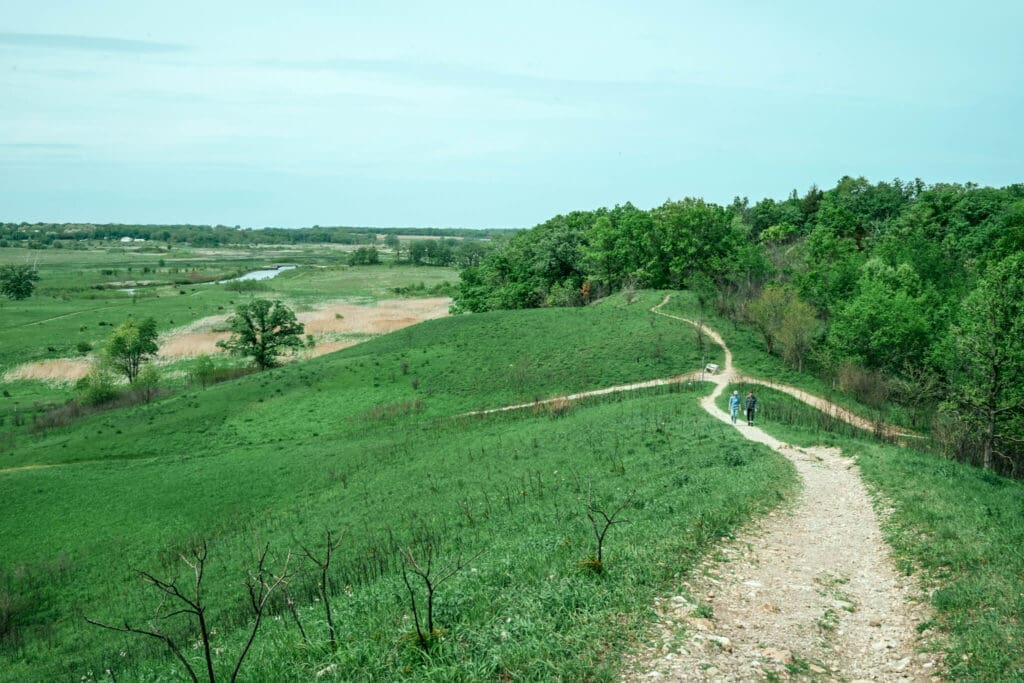
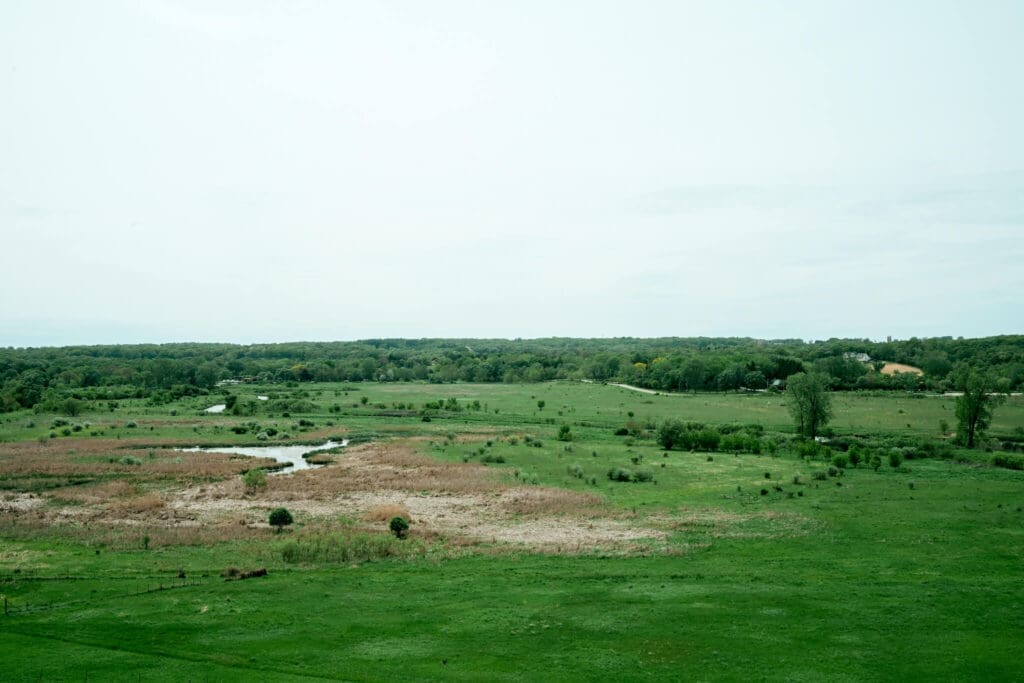
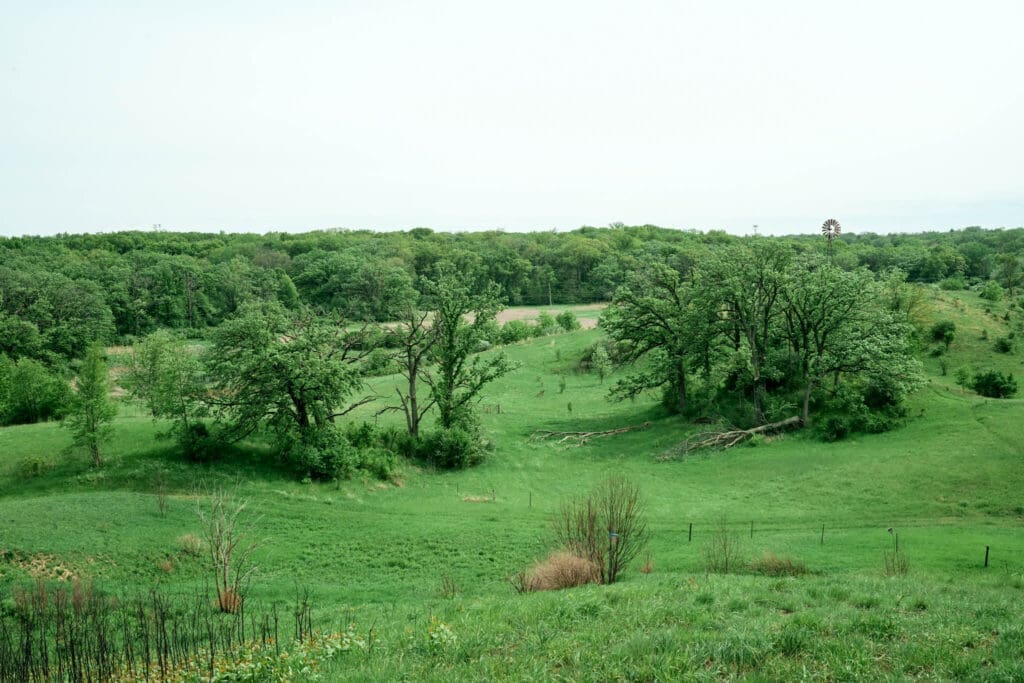
The view from the top of Camelbak Kames
One of the best things about this park is that it is not a state park. Glacial Park is part of the McHenry County Conservation District, so it is not as well known within the state of Illinois (and probably why I never heard of it, until now!). Because of this, it does not get that many visitors. In comparison, Starved Rock and Illinois State Beach (two of Illinois’ most well known outdoor recreational areas) get over 2 million visitors each within the year, while Glacial Park will only see less than 71,000 people.
The main thing is, if you are looking for great hiking and beautiful views without the crowd, that is what you will find here.
This guide will provide you with everything you will need to know about Glacial Park,
Table of Contents
At a Glance
What Makes Glacial Park Unique?
Trails at Glacial Park Conservation Area
Glacial Park Conservation Area Photos and Trail Notes
Best Time to Visit Glacial Park (By Season)
Wildlife & Birding at Glacial Park
Things to Do Beyond the Trails
What to Know Before You Go
Frequently Asked Questions About Glacial Park
Nearby Stops Worth Adding to Your Trip
At a Glance
- Location: 6705 IL Route 31, Ringwood, IL 60072
- Hours: Daylight hours, year-round
- Admission: Free
- Dogs: Yes
- Best For: Hiking, birding, paddling, snowshoeing, families, photographers
- Acres: 3,400+
- Trails: 8+ miles of trails
- Trail App: AllTrails or Prairie State Hiking App
- Annual visitors: 64,000
- Nearest City: McHenry, IL (~6.5 miles south)
What Makes Glacial Park Unique?
A Landscape Shaped by Ice: The Geology Explained
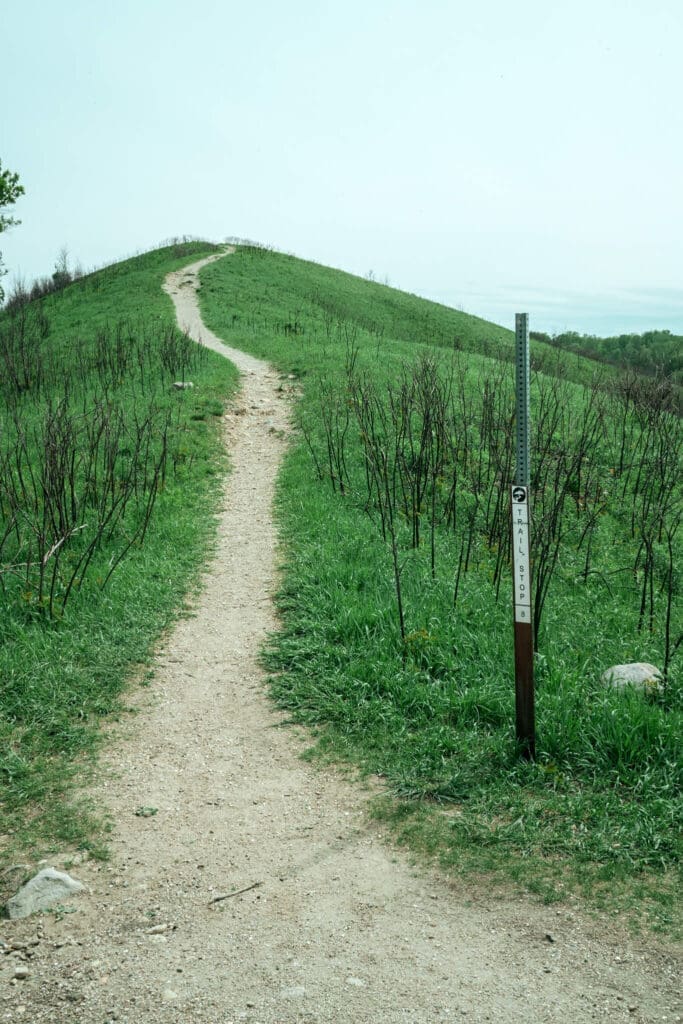
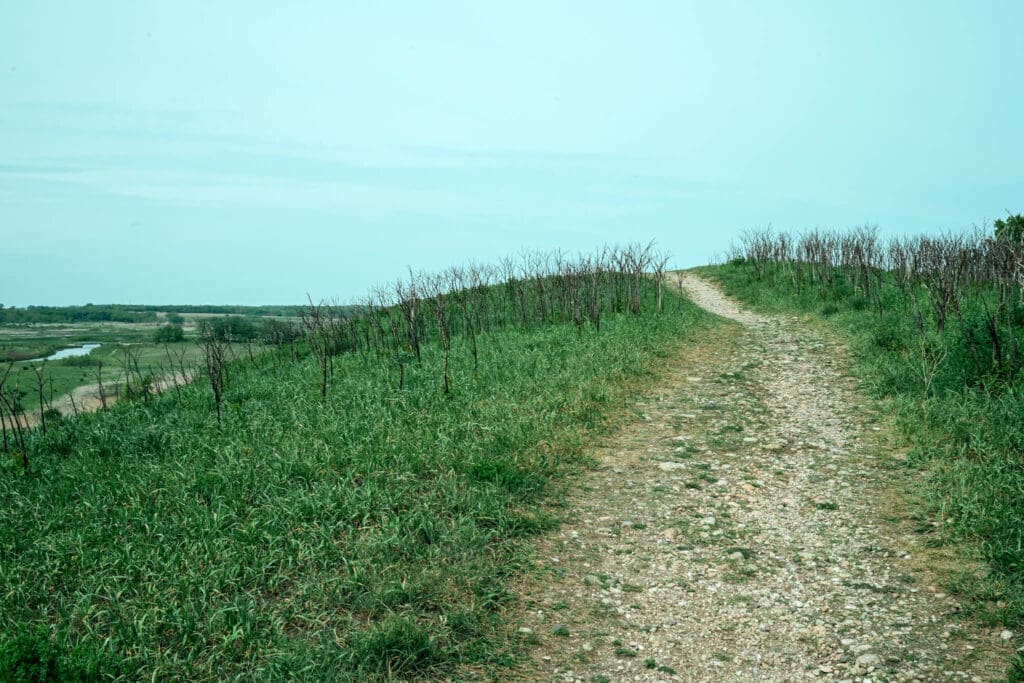
Camelback Kame is one of the most signature features at Glacial Park. What is a Kame? It is a hill composed of mostly sand and gravel that was formed during the last ice age. The kames were formed at the end of a glacier where a waterfall would have flowed off of the glacier causing sand and gravel to form a hill.
Kames are rare in Illinois, as most of the state has been flattened into plains. The Kames that exist today are a result of stagnat sheets of ice that would have melted in place. Glacial Park is also home to 40 endangered species.
Trails at Glacial Park Conservation Area
If you are unfamiliar with the trail system here and you plan to hike the longer trails, I recommend using AllTrails to help guide you. I hiked the Glacial Park Outer Loop, without a map in hand, the trails were not always clearly marked and AllTrails was very helpful to help keep us on the loop.
Deerpath Loop Trail
- Distance (2.1 miles), difficulty (moderate), time estimate (1-2 hours)
- Who it’s best for (first-timers, families)
- What you’ll see (interpretive markers, Camelback Kame, creek overlook)
- Trail conditions note (can be muddy)
Coyote Loop Trail
- Distance (1.2 miles), difficulty (moderate), time estimate (45 minutes – 1 hour)
- Who it’s best for (first-timers, families)
- The name says it all with this trail! In late spring, I saw a lot of coyote scat throughout the trail. The coyotes have a very distinct presence here versus other parts of the park.
Marsh Loop Trail
- Distance (1.1 mi), difficulty (moderate), time estimate (30 minutes – 1 hour)
- Who it’s best for (first-timers, families)
Glacial Park Outer Loop
- Distance (2.3 mi), difficulty (moderate), elevation gain (180 ft), time estimate (2.5 – 3 hours)
- Multiple ecosystems in one loop
- What you will see: Thomas Cemetery, Camelbak Kames, the Bog, Marsh, Weidrich Barn and the sled hill
Full Park Loop (Combined Trails)
- 5+ mile option for dedicated hikers
- How to combine the loops
- Use the AllTrails App, many of the trails are unmarked and AllTrails is very helpful / Prairie State audio tour
Prairie Trail (Cycling)
- 5-mile segment within the park
- Part of the 26-mile McHenry County Prairie Trail
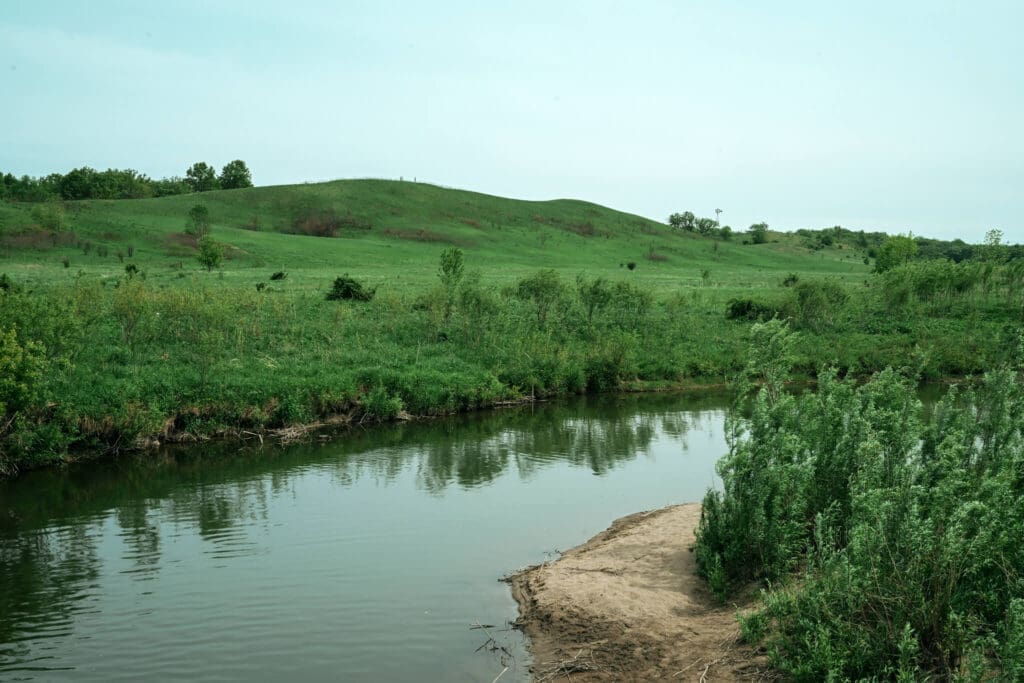
Nippersink Canoe Trail
- Launch at Keystone Landing
- Multiple put-in/take-out points
- What you’ll see on the water (herons, kingfishers, wetland edges)
- Fishing access at Keystone and Pioneer Road Landings
Glacial Park Outer Loop Photos & Trail Notes
The Thomas Cemetery
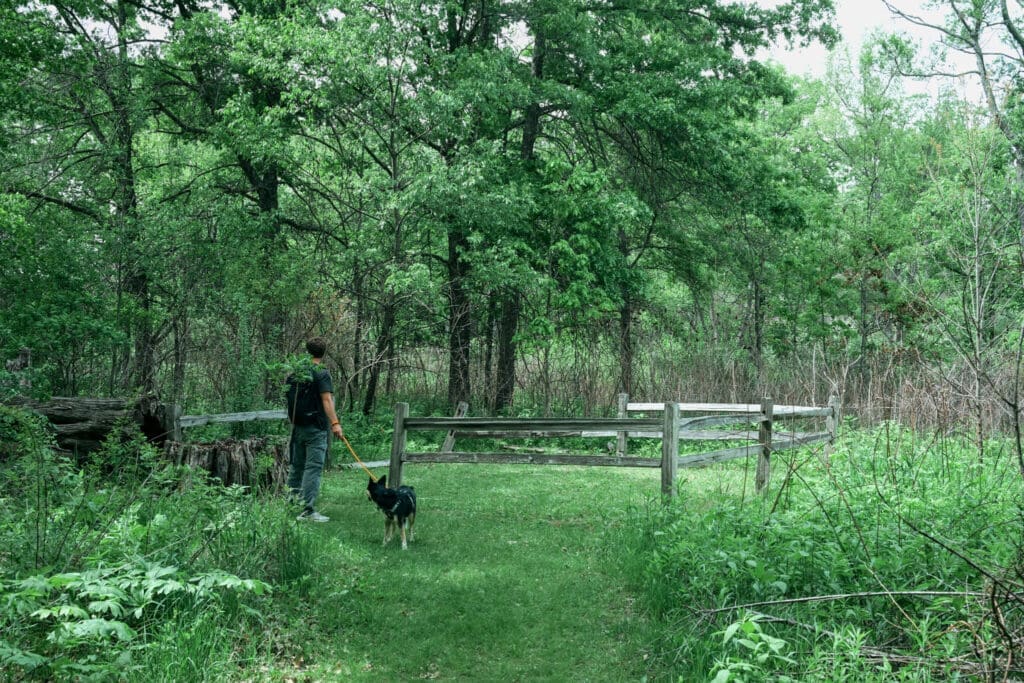
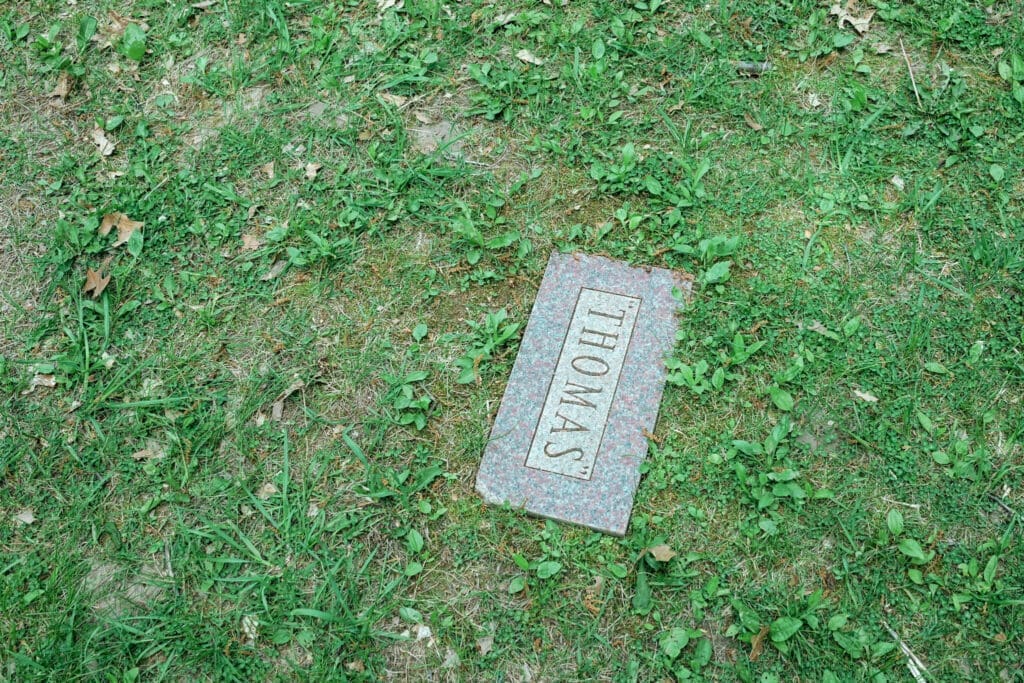
The Thomas Cemetery is a site to see along the Glacial Park Outter Loop. According to the The W.A. McConnell Foundation, under the shade of what had been a 250+ year old oak tree, lies the Thomas Family burying ground. The Thomases were a homesteading family who lived in the mid-1800s. Five of their children never reached adulthood. In the 1990s, the McHenry County Conservation District staff located the burial site and placed new stone markers to commemorate this brave family and their five young ones lost far too early.
When you visit the cemetery, the old oak tree is no longer standing and its stump remains. In the photo below, you can see that the large stump and fallen tree remain (to the left side of the fence).
Wiedrich Barn
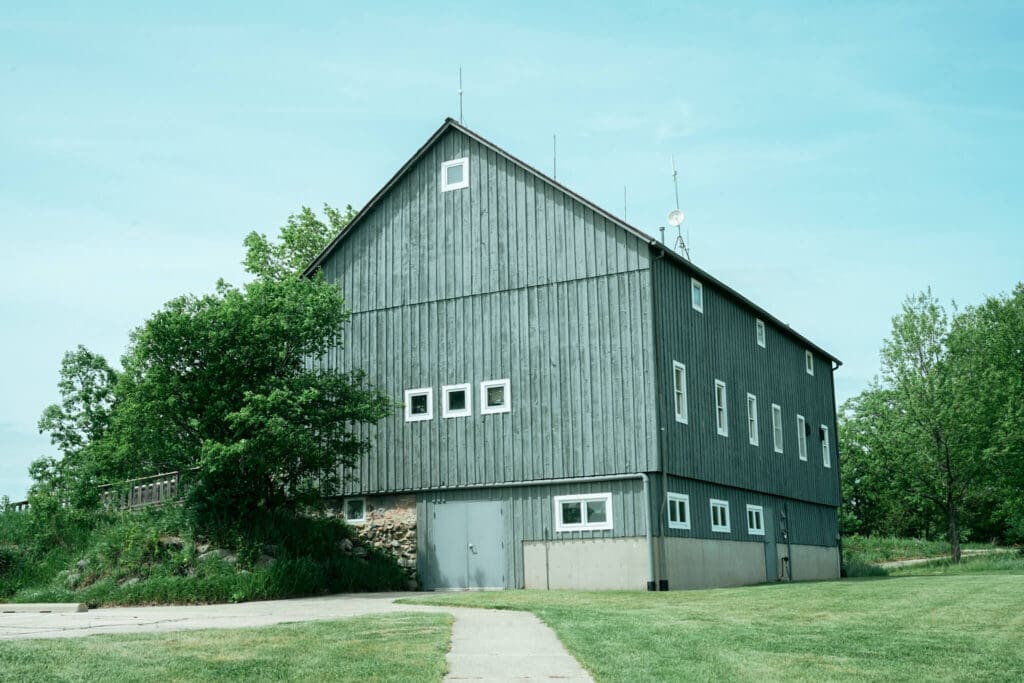
According to the McHenry County Conservation District, the Wiedrich Barn is the last remaining major building from the Diedrich Homestead, the first parcel purchased in what is now Glacial Park. The Wiedrich brothers farmed this area with the Wiedrich sisters eventually owning this parcel. Significant oral and written documentation of the land use history of the site exists, including interviews with the sisters talking about life on the farm for eight decades and how the dust bowl affected this area. The Barn has undergone adaptive reuse over the years serving as staff offices, meeting space and a program area with a modern interior and a historical facade.
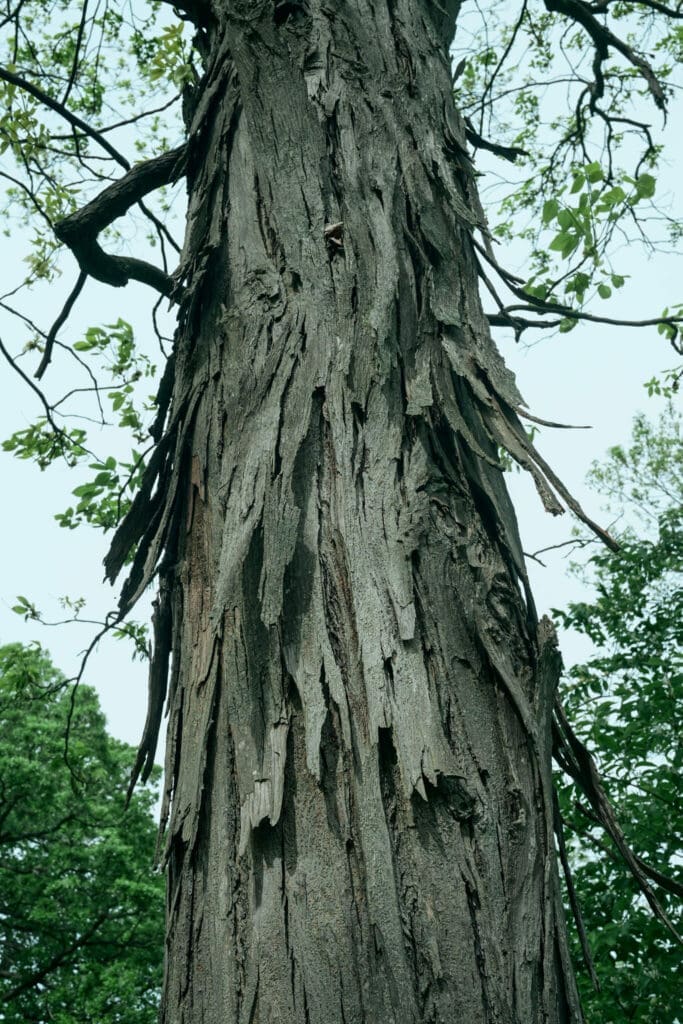
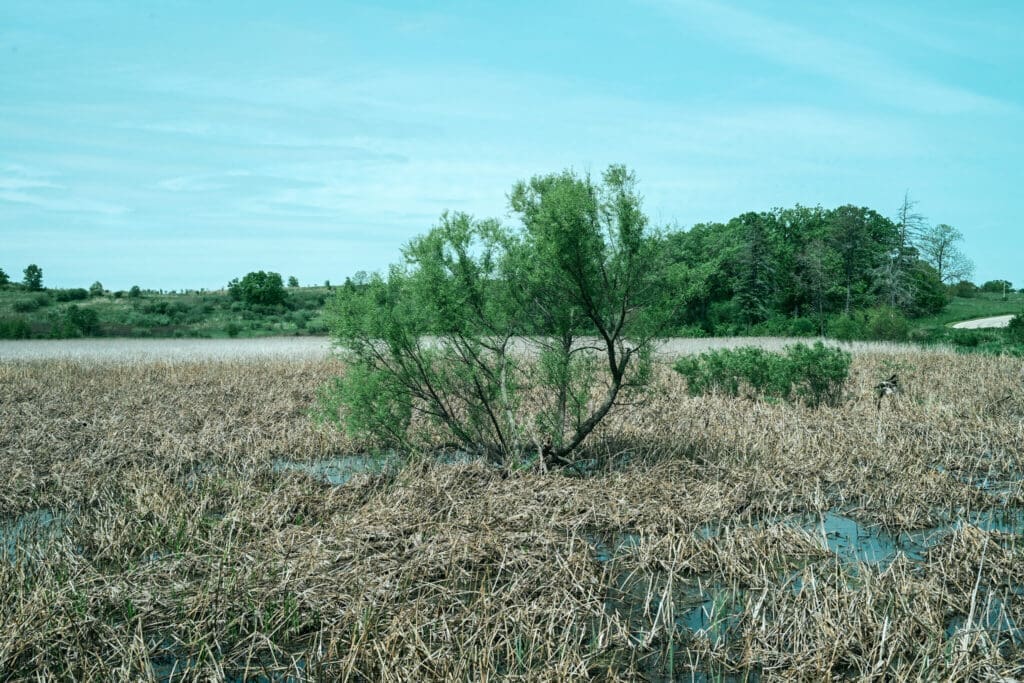
Camelback Kame
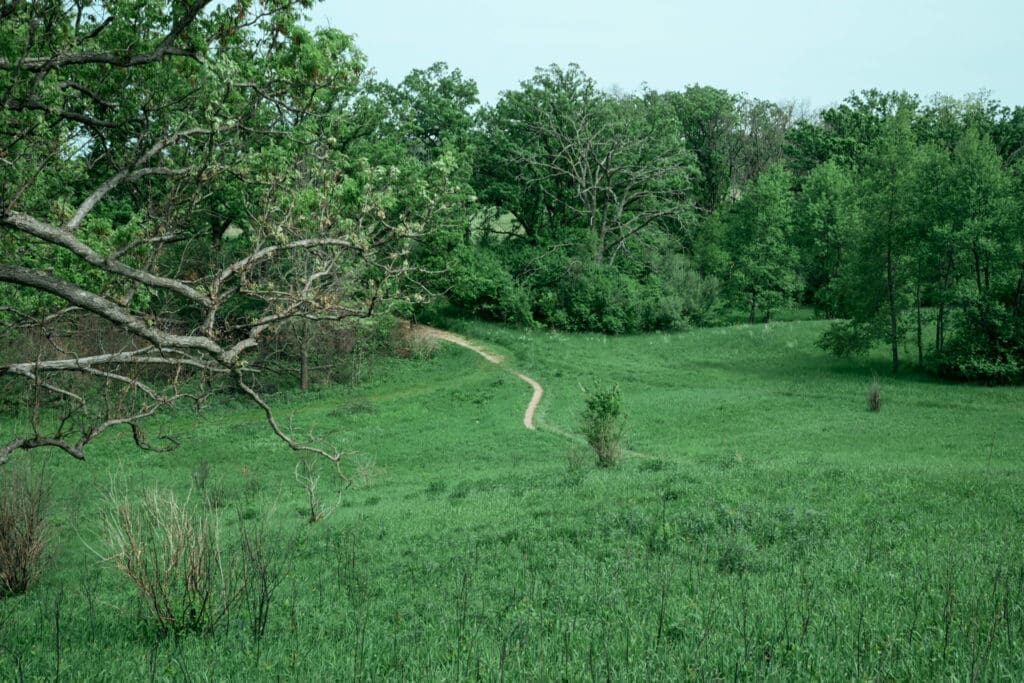
Camelback Kame is Glacial Park’s signature, you definitely don’t want to miss the view from the top.
Best Time to Visit Glacial Park (By Season)
Spring (March–May): The Best Season for Wildlife
- Migratory bird flood + spring peepers in the bogs
- Trail conditions (muddy but rewarding)
- Solitude advantage
Summer (June–August): Peak Season for Families
- Tallgrass prairie in full bloom
- Great paddling and fishing conditions
- Parking/crowd tips (arrive before 9 a.m. on weekends)
- Outdoor concerts and programming
Fall (September–November): The Most Scenic Time to Go
- Oak savanna color + fall wildflowers
- Migrating raptors over the kames
- Bald eagles beginning to appear
- Fewer crowds after Labor Day
Winter (December–February): A Surprisingly Great Visit
- Snowmobile trails (9 miles), cross-country skiing, sled hill
- Best bald eagle sightings of the year along the creek
- Stark kame topography without foliage
Wildlife & Birding at Glacial Park
What Birds Can You See at Glacial Park?
- Top 5 species list: Great Blue Herons, Sandhill Cranes, Wood Ducks, American Kestrels and Bald Eagles.
- Ranked top 5 in Chicago region for migratory wetland birds.
- Outdoor spotting scope deck at Lost Valley Visitor Center.
Other Wildlife to Watch For
- White-Tailed Deer, Fox, River Otters, and Turtles along the creek.
- 40 state-listed endangered/threatened species context.
Birding Tips for Glacial Park
- Best spots (Camelback Kame overlook, Nippersink Creek edge, and the Bog area).
- Best time of day (early morning and late afternoon).
Things to Do Beyond the Trails
Lost Valley Visitor Center
- What’s inside (exhibits, library, spotting scopes and treetop deck).
- Monthly nature detective programs.
Historic Powers-Walker House (Built 1854)
- Greek Revival homestead.
- Annual events: Ice Cream Social of 1858, Harvest Gathering and Archaeological Awareness Day.
Picnicking & Group Shelters
- Stone amphitheater, Kettle Lot and Harts Road Shelter (reservable).
What to Know Before You Go
What to Wear & Pack
- Footwear: hiking boots or waterproof boots recommended (in the muddy seasons)
- Layers, bug spray and sunscreen by season
- Water (no fountains on trail)
- Tick awareness in spring/summer
Parking & Getting There
- Free parking at all trailheads
- Directions: IL Route 31 + Harts Road, Ringwood, Illinois
- Weekend arrival tip: before 9 a.m. to secure a parking spot
Trail Navigation & Maps
- AllTrails App
- Prairie State Hiking App (free, includes audio tour)
- Cell service can be spotty — download before you go
Rules & Etiquette
- Dogs on leash
- Leave No Trace principles
- No hunting except within Hackmatack Refuge regulations
- Fishing requires Illinois license
Frequently Asked Questions About Glacial Park
- Is Glacial Park free? Yes — free admission and free parking.
- Are dogs allowed at Glacial Park? Yes.
- How long does it take to hike Glacial Park? 45 min (Deerpath Trail) to 3+ hours (full loop).
- Is Glacial Park good for kids? Yes — Deerpath Trail, visitor center programs and sled hill.
- Can you kayak or canoe at Glacial Park? Yes — Nippersink Canoe Trail from Keystone Landing.
- What is the best trail at Glacial Park? Deerpath Loop for first-timers; Outer Loop for a longer challenge (you can see it all on the Outter loop!).
- Is Glacial Park the same as Hackmatack National Wildlife Refuge? Related but distinct — Glacial Park is the main public access point into the refuge.
- Is Glacial Park open in winter? Yes — snowmobiling, cross-country skiing and sledding available.
Nearby Stops Worth Adding to Your Trip
- Volo Bog State Natural Area — Only quaking bog in Illinois (15 min away).
- Chain O’Lakes State Park — Fishing, boating and camping nearby.
- McHenry County Prairie Trail — Extend your bike ride outside the park.
- Richmond, IL — Small-town lunch stop after your hike.
- Disc Golf — Fairfield Park in Round Lake, IL (25 min away). This is the #7 course in the state of Illinois and is well worth the visit.

Comments +